


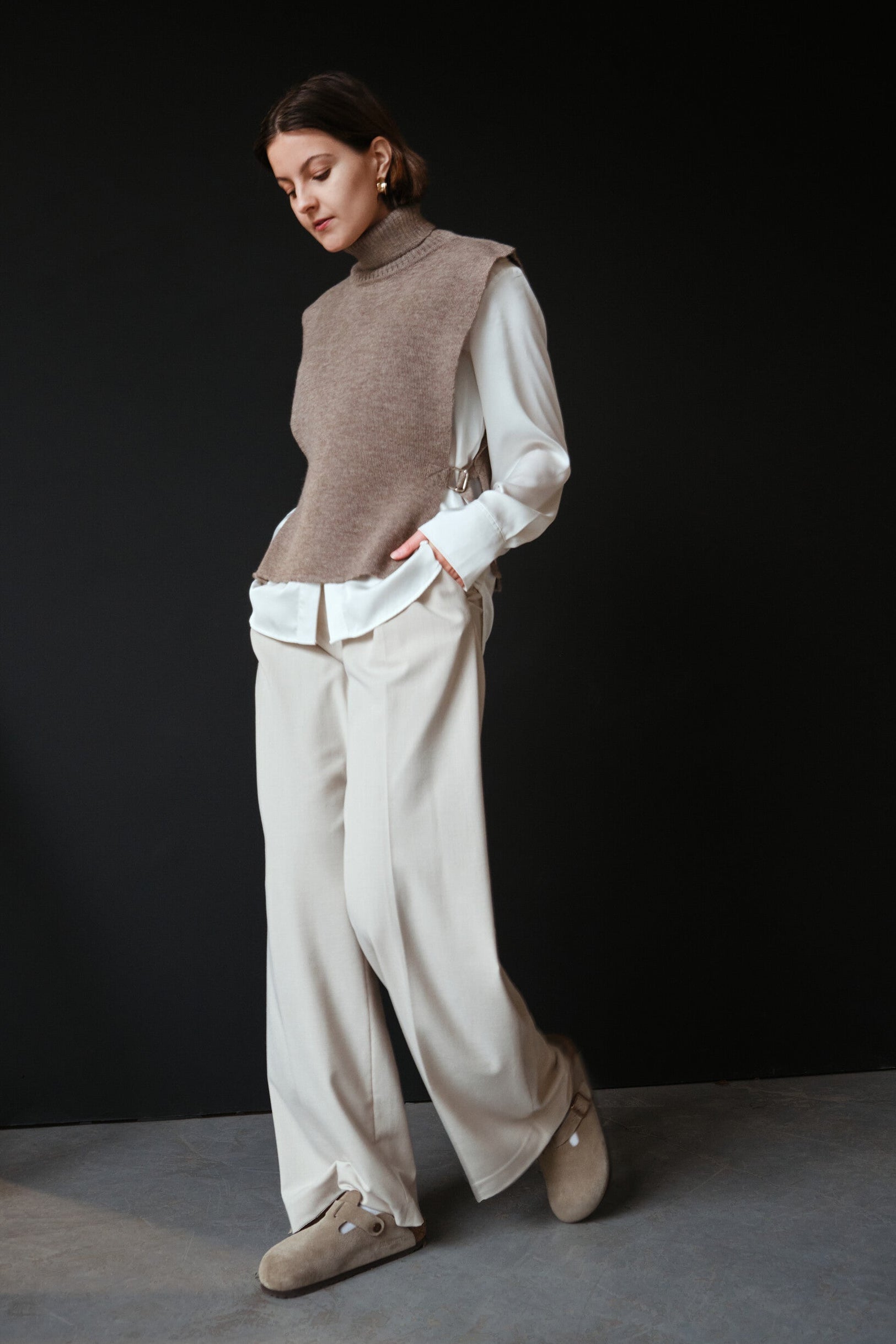


Care, Cleaning and Repair of Knitwear
Caring for and cleaning knitwear is easy once you know the basics of looking after garments made from alpaca wool. The instructions below apply not only to Alpa knitwear (including linen–alpaca blends), but also to washing and maintaining other wool garments.
Knitwear Maintenance
The lifespan of garments can be extended with occasional maintenance. This also applies to alpaca wool knitwear. Regular care helps ensure that your sweater continues to look neat even after many wears.
Long-fibred and elastic alpaca wool is an excellent natural fibre that has been shown to pill less, and more slowly, than many other fibres. In practice, pills are small accumulations of dust, grease, or other dirt from the garment’s surface, together with loose fibres from the knitwear and other textiles that have become tangled together.
Pilling can occur when knitwear is exposed to friction. This may be caused, for example, by a bag, jewellery, or an overcoat. Over time, pills may naturally form in areas that are exposed to friction, such as the underarms or sleeves of a sweater. Fortunately, pills can be removed from a quality knit easily and quickly with light maintenance.
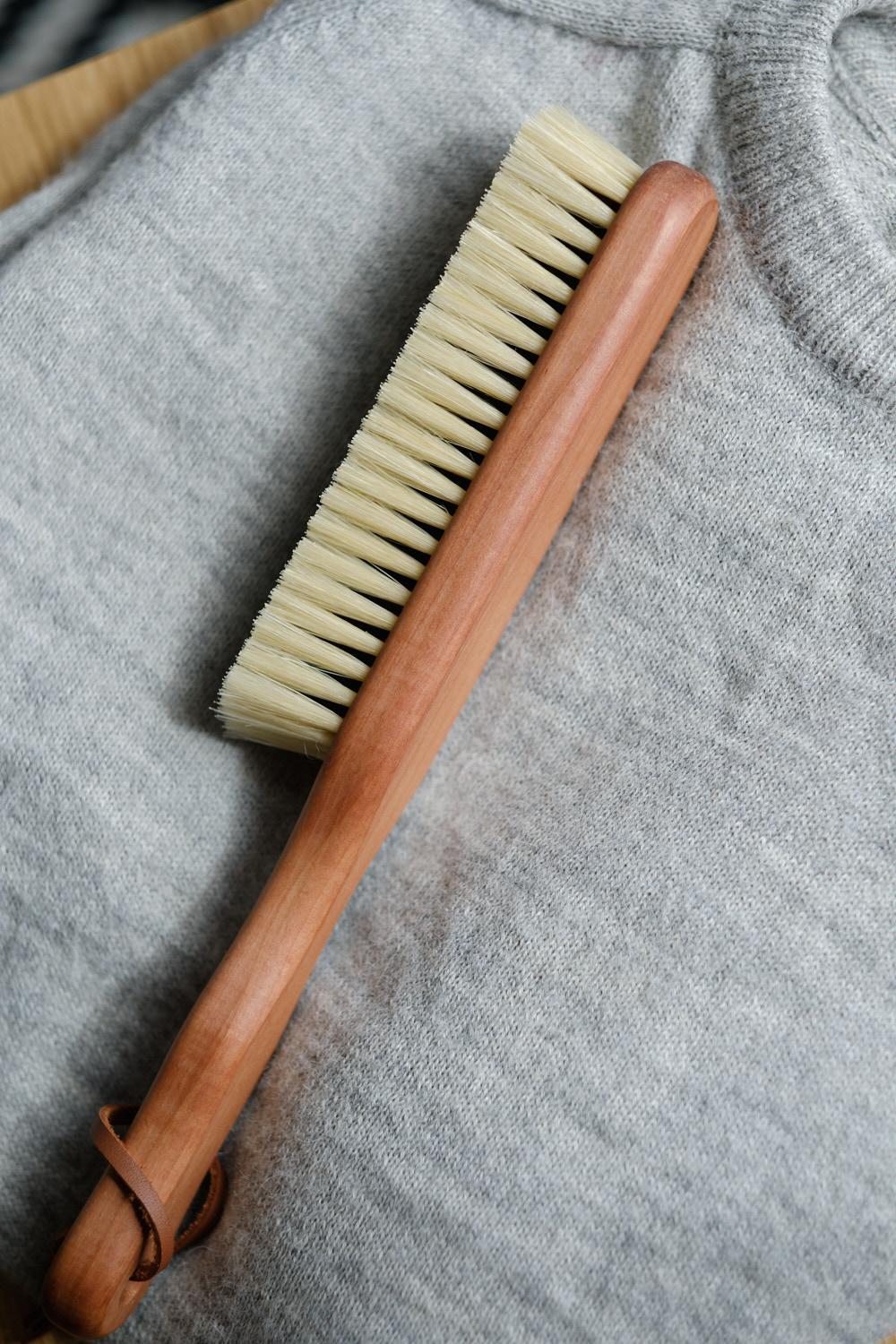
How to Maintain Knitwear by Brushing
Maintaining your knitwear can be a pleasant, relaxed task — something you might do on the sofa with a cup of coffee or while watching your favourite series. For maintenance, you will need a soft-bristled clothing brush. A spray bottle and a cleaning comb for the brush can also make the process easier, although the brush alone is sufficient.
Lay the garment on a flat surface while working on it, such as an ironing board or a firm cushion. A stable surface keeps the garment in place and makes the process easier.
Before brushing, lightly mist the knitwear with water using a spray bottle. This helps loose dust adhere to the brush and keeps the surrounding area cleaner.
Brush the area that needs care using short, firm strokes following the direction of the knit. Work through the garment section by section (sleeves, front panel, back panel, and so on). If there are pills on the surface that do not come off with brushing, you can remove them by gently picking them off with your fingers or carefully trimming them with scissors.
Dust that collects on the brush can be removed most easily with a brush cleaning comb, available in the care and washing products section of our online store.
The surface of knitwear can also be maintained with other tools, such as a fabric shaver or a razor blade. However, we primarily recommend brushing, as it is the gentlest method of maintenance.
Cleaning Knitwear
Freshen your Alpa knitwear primarily by airing it out. Breathable, soft and warm alpaca wool is a naturally dirt-repellent natural fibre. For this reason, knitwear does not need to be washed as frequently as garments made from many other materials.
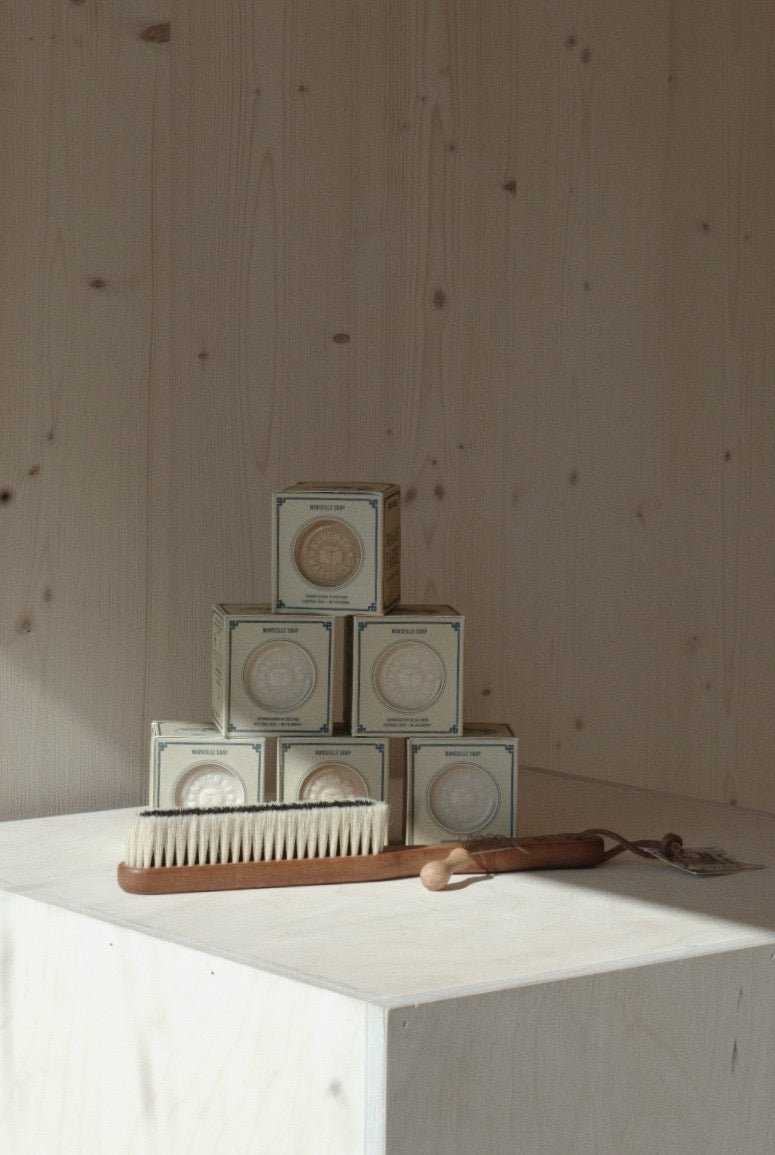
Individual stains are best removed locally, for example with a damp cloth. For stain removal, we recommend Marseille soap.
If airing or spot cleaning is no longer enough, it is time to wash the garment. The recommended washing method for Alpa knitwear is hand washing. The most important factors during washing are the temperature of the water, gentle handling, and reshaping the garment back to its original form after washing.
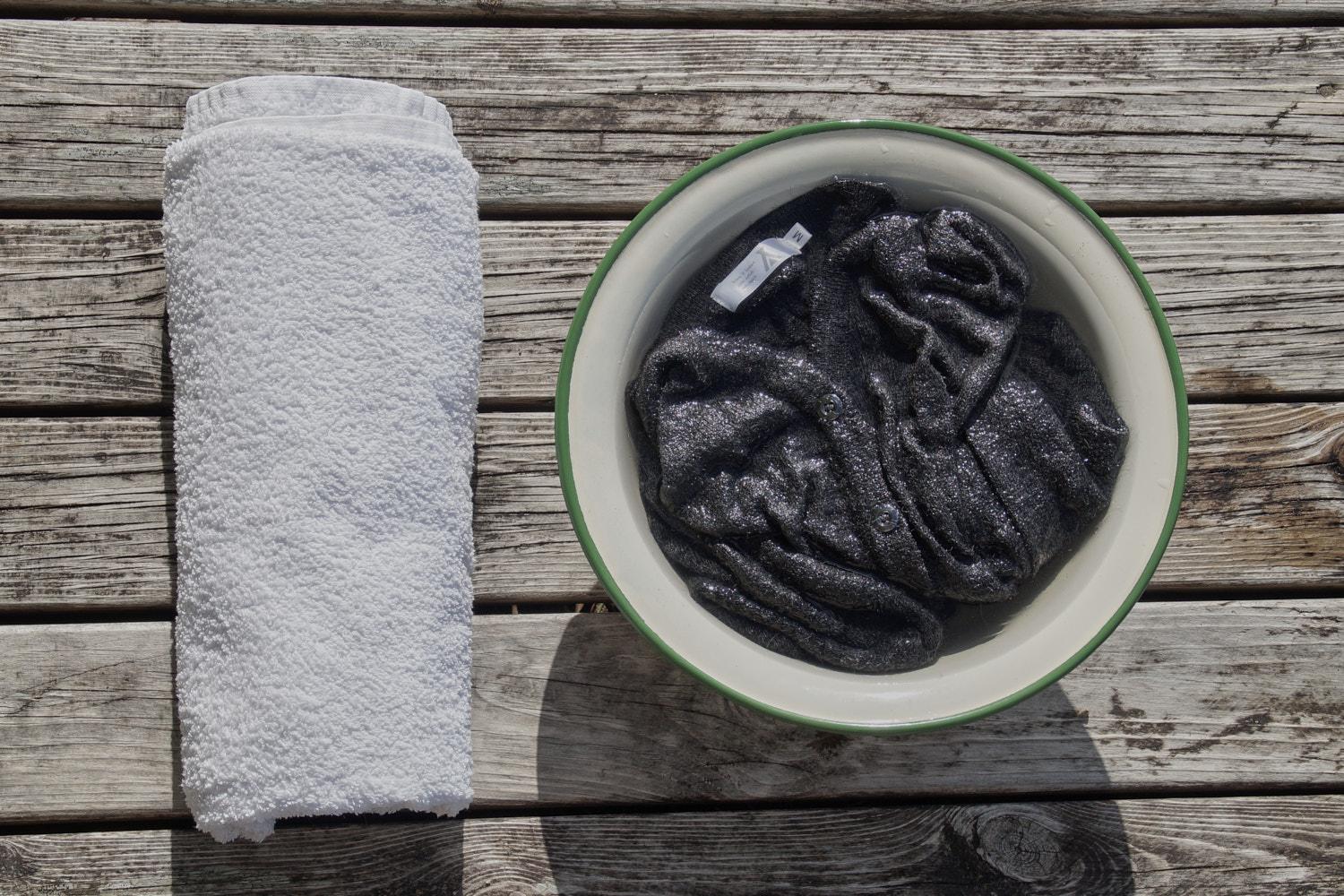
Hand Washing
1. Fill a basin or sink with cool or cold water (about 20 °C).
2. Add a small amount of soap suitable for wool fibres (for example, white Marseille soap).
3. Gently squeeze the garment, allowing the washing water to pass through the knit.
- Do not rub.
- Do not wring.
4. Change the water and rinse the garment by gently squeezing it. The water temperature should remain the same.
5. Drain the water and place the garment on a towel. Roll the garment inside the towel and press the roll gently to remove excess water.
6. Reshape the garment to its original form and leave it to dry flat on a surface — do not hang it.
7. If necessary, steam the surface of the knit to smooth it.
By airing your knitwear, removing stains locally, minimising washing, and following these washing instructions, you can keep your garment clean and beautiful for a long time.
Steaming Knitwear
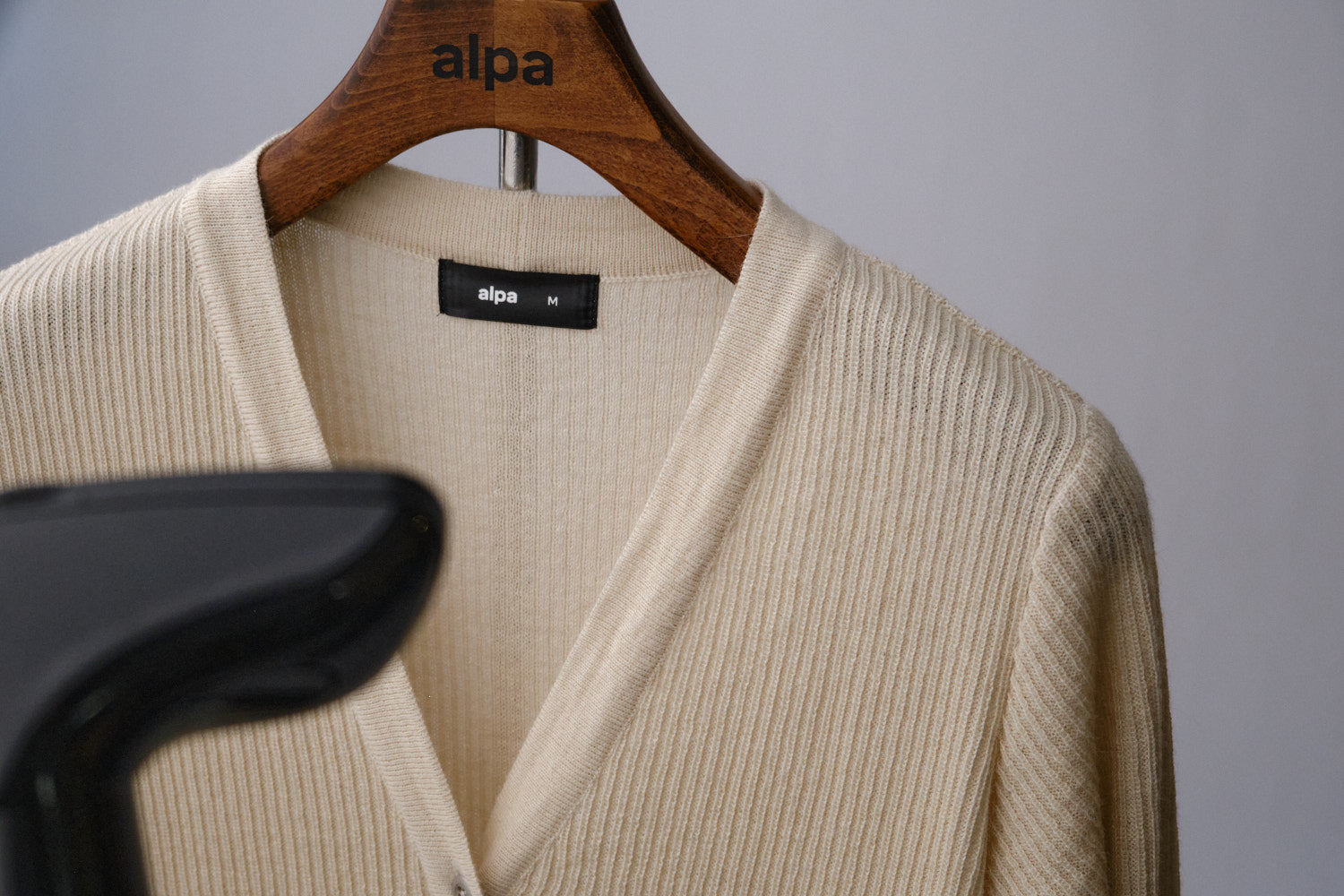
Steaming is part of knitwear care
Alpaca is a durable and elastic fibre that does not stretch out easily. However, with heavy use even a high-quality knit garment may lose some of its shape, for example around the elbows. One of the wonderful qualities of alpaca wool is that, as a natural fibre, it responds very well to steam and can return to its original shape. Steaming can be done with a garment steamer or with the steam function of an iron at a moderate temperature — leaving the garment looking as good as new.
Steaming knitwear is an essential part of caring for it. For example, a surface that has become wrinkled or slightly fuzzy during washing can be smoothed again with steam. The garment can be steamed several times if needed until the desired result is achieved.
In addition to care, steaming can also be used to adjust the shape of a knit garment. Moist steam and heat temporarily loosen the grip of the alpaca fibres on one another, allowing the knit to be either stretched or slightly shrunk as needed. Once the knit dries, the fibres lock firmly into their new shape.
To reshape a garment, you will need a steam iron and a surface that can withstand hot steam. The steam can be set to full power, and the temperature should be set to the wool setting.
Please note that both stretching and shrinking will partially return during wear. For example, a shortened sleeve may lengthen slightly again, and a stretched section may contract somewhat from the size achieved during reshaping. The treatment can be repeated as needed.
Stretching a Wool Knit with an Iron
Stretching a knit garment is quite simple. Lay the garment flat and steam the area you wish to stretch thoroughly. Gently pull the knit with one hand while moving the iron with the other in the opposite direction. Repeat the process until the desired measurement is reached.
Knitwear reshapes surprisingly quickly. If you happen to stretch the garment too much, the situation can fortunately be corrected quite easily.
Shortening or Shrinking a Wool Knit with an Iron
To shrink a knit garment, steam it until the fabric becomes slightly damp, then gently compress the knit to make it more compact. Let it dry flat and repeat the process if necessary.
Although this method may seem ineffective at first, it usually works almost as quickly and easily as stretching.
Shrinking can also be applied locally, for example to tighten the cuffs of sleeves. Another option is to dip the cuff in hot water and gently compress it to make it tighter. However, it is best to avoid heavy rubbing, as this may cause the surface to felt.
When reshaping knitwear, it is important to allow the garment to dry completely before wearing it. Always dry knitwear flat, so that it does not stretch out of shape.
Repairing Knitwear
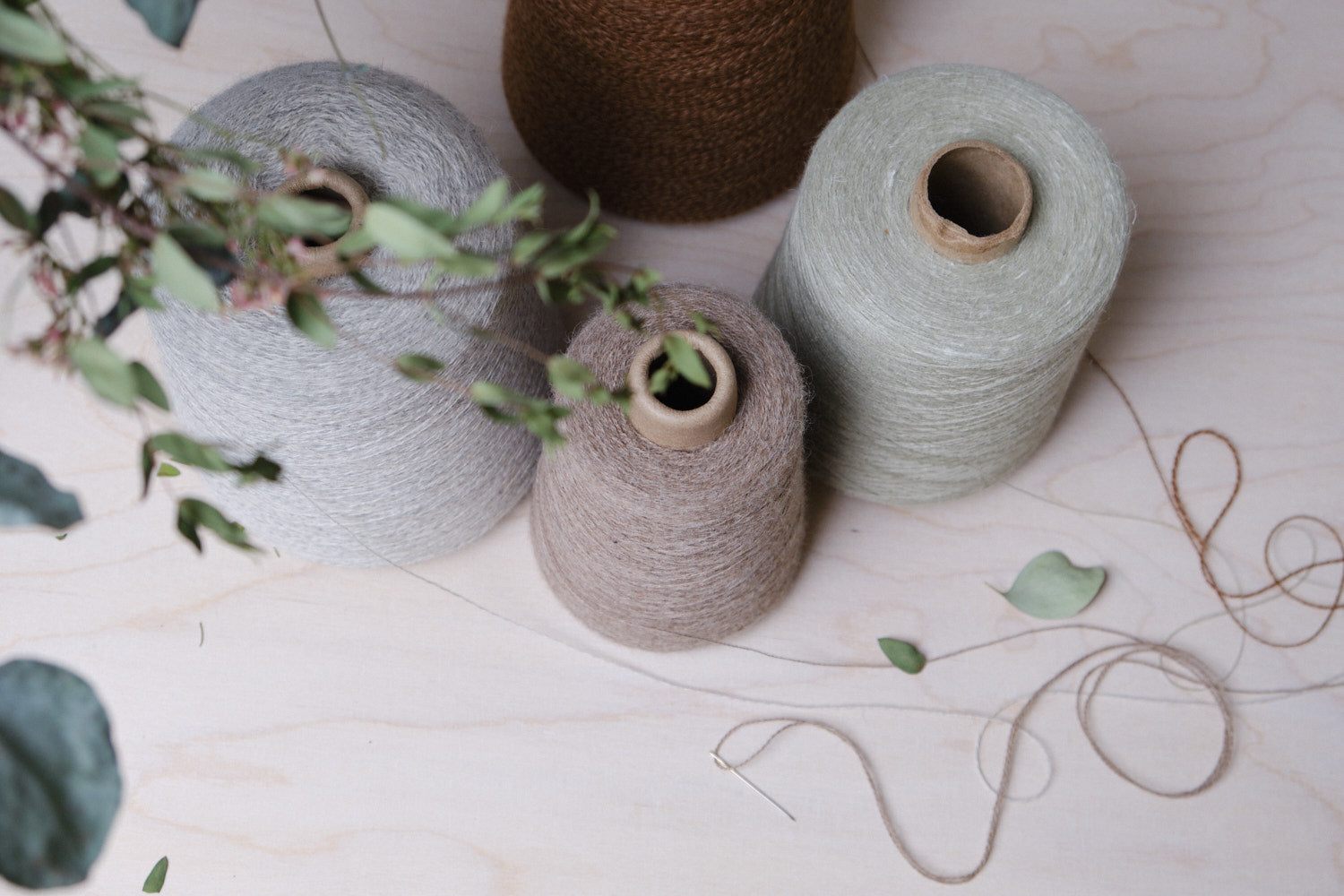
Knitwear made from 100% natural materials can last for many years, but frequent wear may eventually cause holes to appear. Areas exposed to friction — such as elbows and cuffs — naturally wear down over time. If a worn area is not reinforced in time, it may eventually develop into a hole. Repairing holes in knitwear is particularly important because the stitches around the hole can easily begin to unravel, which may cause the damage to spread.
If you notice that the yarn in a friction-prone area of the knit has begun to thin, it is best to reinforce the area immediately to prevent a hole from forming. Thinned knit fabric often has a slightly mesh-like structure, which makes it relatively easy to reinforce through darning.
There are many different ways to darn knitwear. Different techniques create different textures and visual results.
Some darning styles closely follow the original knit structure, meaning the repaired or reinforced area becomes almost invisible. Alternatively, the appearance of the garment can be changed intentionally by reinforcing the area with contrasting yarn, creating a decorative pattern as part of the repair.
Instructions for Traditional Darning (Cross-Weave Method)
1. Secure the damaged area by making small stitches around the hole so that every stitch surrounding the hole is gathered into the repair. For extra durability, you may repeat this step and make a second round in the same way.
2. Begin the darning by weaving the warp threads along the direction of the vertical rows of stitches. Insert the warp threads so that the stitches you made earlier become hidden beneath them.
3. Continue by weaving the thread over one warp thread and under the next. Start weaving either from the top or the bottom edge. At the end of each row, pass the thread through a stitch in the knit and turn to the next row. Continue until the entire warp area has formed a neat cross-woven pattern.
(Tip: If you are using a sharp darning needle, pass the needle between the warp threads with the eye of the needle leading.)
Finally, secure the ends of the yarn on the inside of the garment by weaving them into the knit. It is best not to tie a knot, so that the repaired area can move naturally with the surrounding knit.
If your knitwear has worn thin and developed a mesh-like structure in some area, you can reinforce it by following the instructions in step 3. In this case, the repair yarn is woven through the stitches of the knit itself instead of warp threads.
If you need repair yarn for an Alpa sweater you have purchased, please send us an email at info@alpaknitwear.com and tell us which colour of yarn you need. We will send the yarn to you free of charge by mail.
Darning video tutorial:

Video