


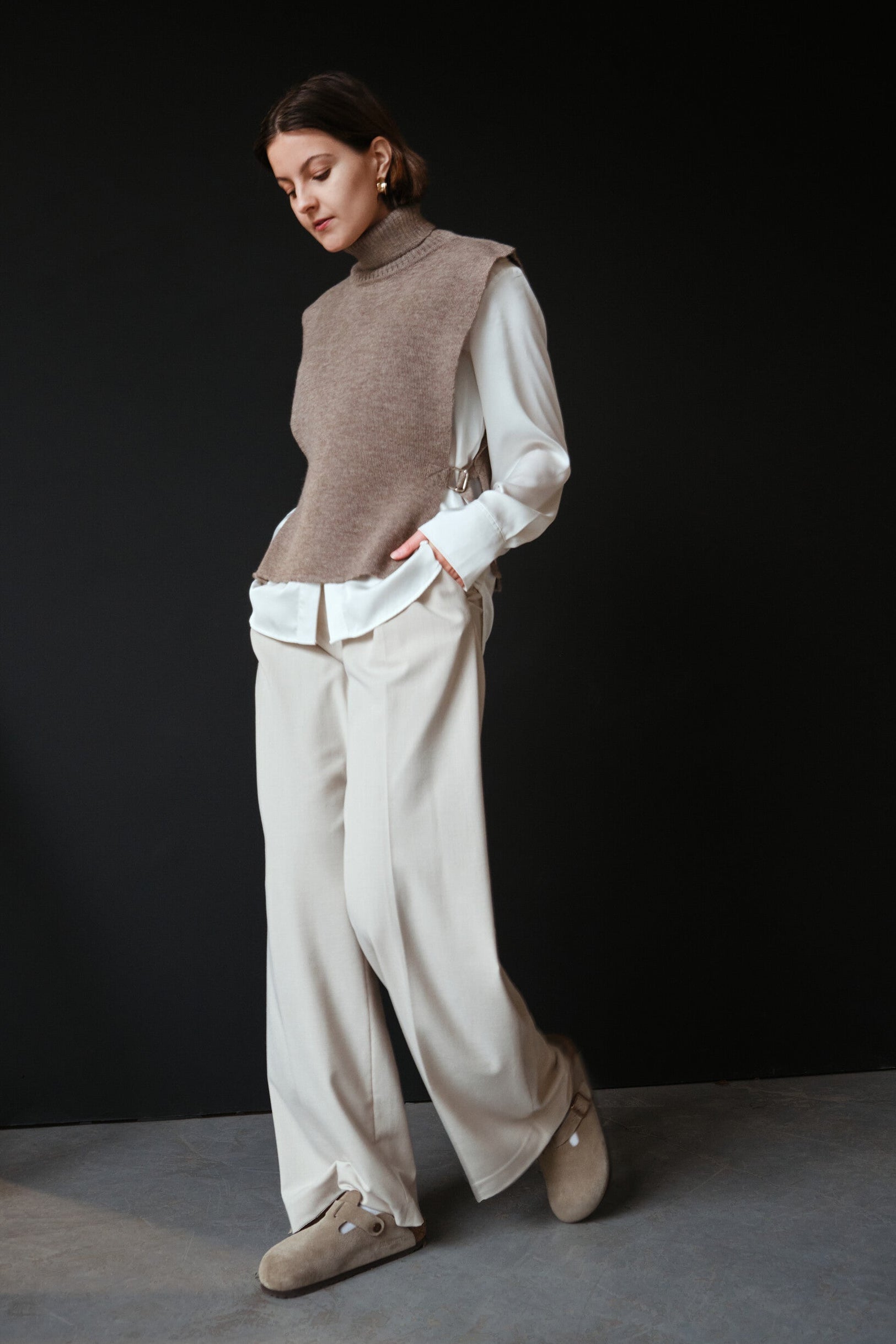


Fibre of the Kings

Why Alpaca Feels Different
Alpaca wool combines two qualities wool-lovers usually have to choose between: the softness of cashmere and the durability of lambswool. It feels luxuriously soft against the skin, breathes well, and only gets better with wear. It also suits most people with wool allergies, because alpaca fibre contains no lanolin.
We work with different grades for different purposes. Fine Special alpaca gives us the most durable fibre; Baby alpaca, a reference to the finer grade rather than the age of the animal, is the softest. The choice depends on the structure and density of the knit, so each product gets the yarn that suits it best.

From the Inca Highlands
In the Inca empire, alpaca wool was reserved for kings and royalty. It's not hard to see why: few natural fibres are as soft, as warm, or as quietly luxurious against the skin.
Centuries later, the alpaca is still a highly respected animal in Peru: culturally, historically, and economically. The herds graze freely across the Andean highlands and are gathered only for shearing.

Easier on the Earth
Alpaca farming is gentler on the land than sheep or cashmere goat farming. Their soft, padded feet don't cause the erosion that hooves do, and they graze without tearing out the roots of the grass.
Shearing is part of caring for the animal, not just harvesting from it. A full fleece would leave an alpaca dangerously hot in summer. Alpaca wool is always mulesing-free.